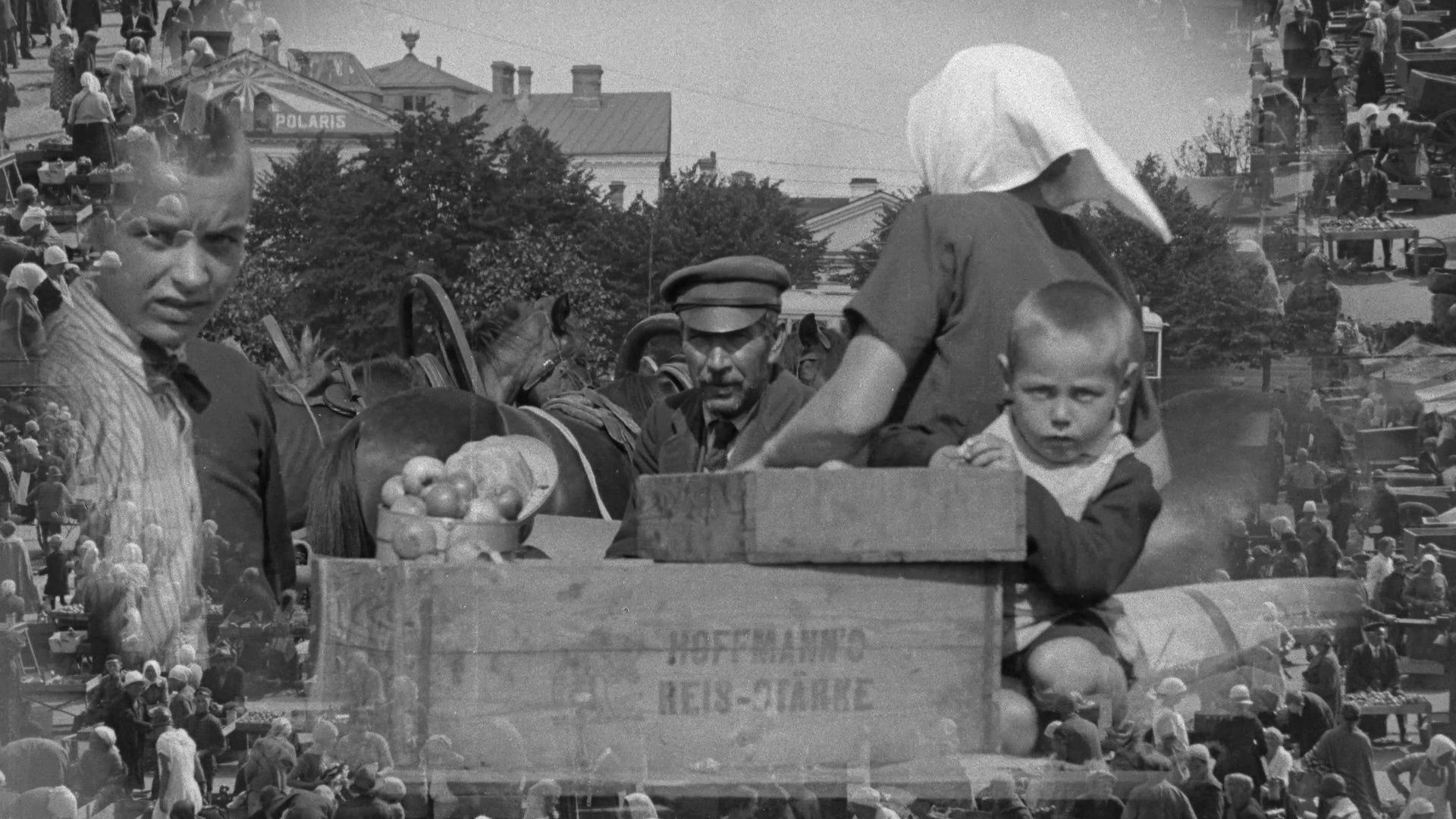
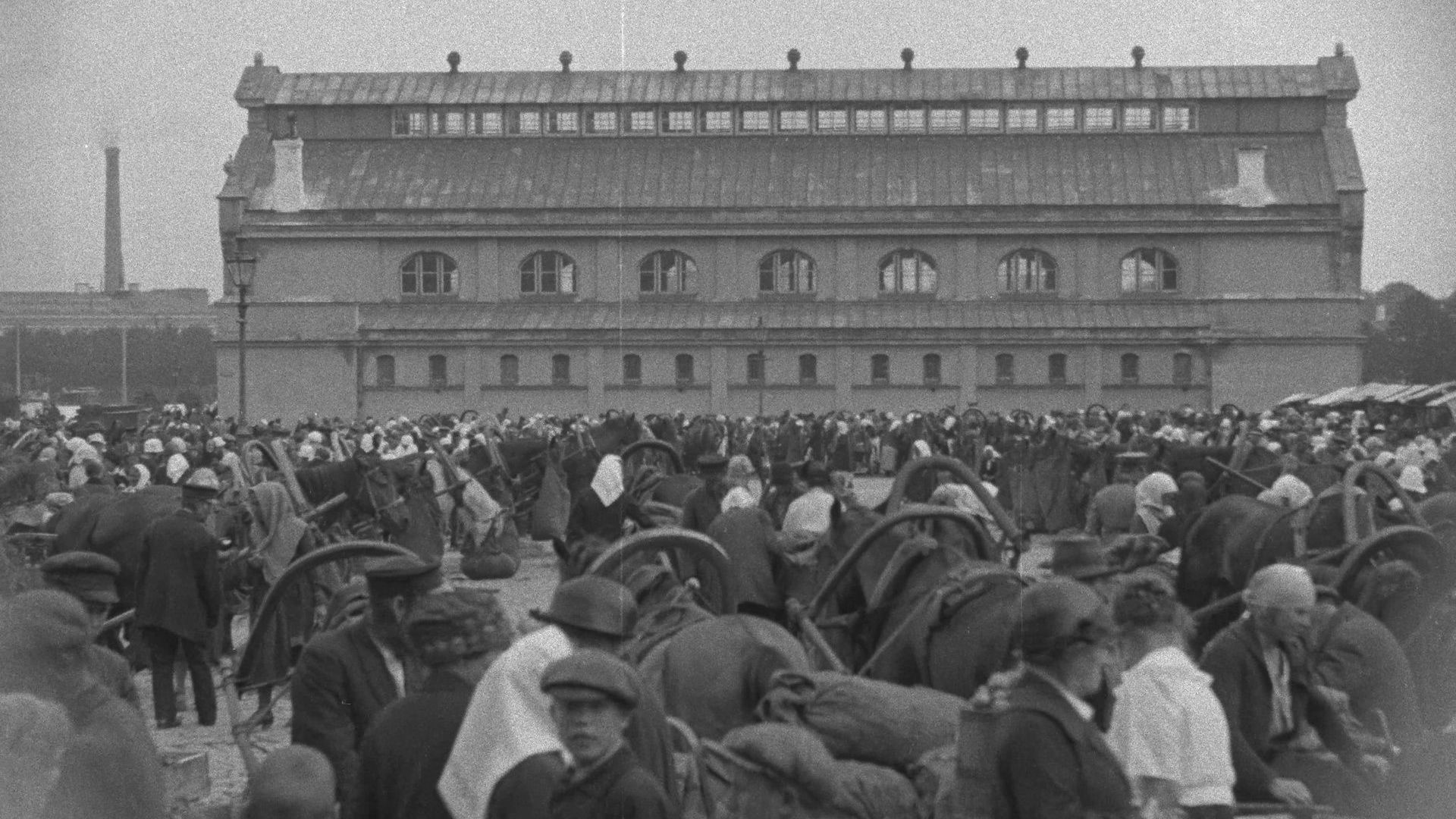
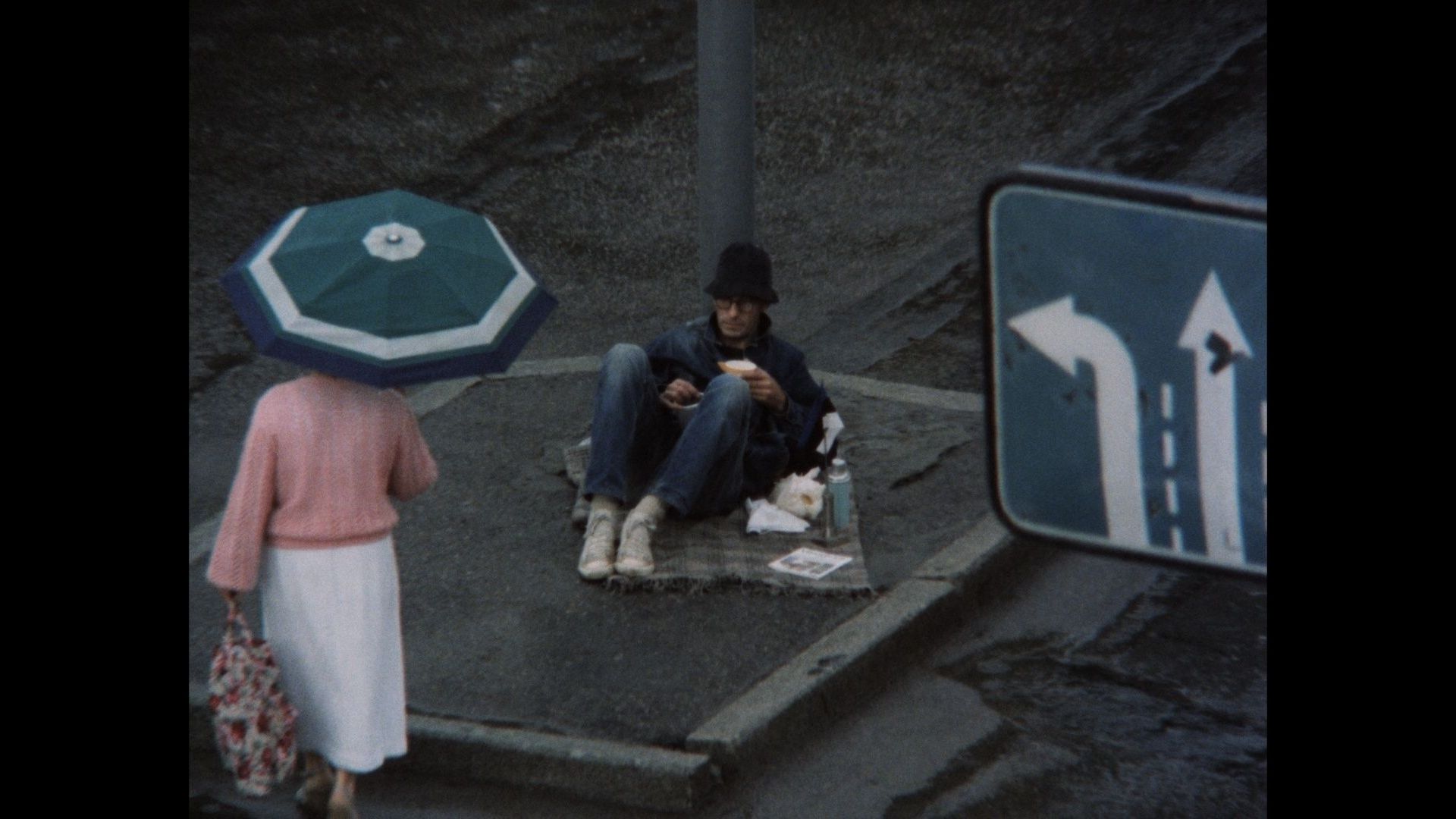
“Tallinn Market” is Estonia’s first experimental film, shot by Konstantin Märska during the summer of 1926 at the New Market beside the Estonia Theatre. With a dazzling array of optical effects, Märska captures the bustle of a day’s trading against a modern Tallinn cityscape that has in part since disappeared.
A pioneering figure of Estonian cinema, Märska (1896–1951) had been immersed in filmmaking from an early age and co-founded the production company Estonia Film in 1919. Cameraman, inventor and tireless experimenter, he combined technical curiosity with a keen eye for telling details and memorable human characters – qualities already vividly present in “Tallinn Market”.
Märska’s fascination with optical effects – or tricks, as they were then known – was strengthened in Germany, where in the mid-1920s he briefly worked under the legendary silent-era cinematographer and innovator Guido Seeber. Such effects had become an important means of exploring cinema’s artistic and imaginative potential: its capacity not merely to record images, but to create them. In “Tallinn Market”, Märska similarly tests what the camera can reveal, drawing out both to broader patterns and fleeting details that might otherwise escape the naked eye.
The film is also a remarkably early example of the city symphony, a genre only then beginning to gather momentum. Its canonical work, with German director Walther Ruttmann’s “Berlin: Symphony of a Metropolis” (“Berlin, die Sinfonie der Grosstadt”), followed in 1927. Combining poetic montage, experimental imagery and often the rhythm of a single day, city symphonies transformed the modern metropolis into a living organism, shaped by architecture, crowds, machinery, traffic and everyday life.
Closely attuned to the experience of modernity, the genre attracted filmmakers including Dziga Vertov, Mikhail Kaufman, Joris Ivens, Jean Vigo and Robert Flaherty, and grew into an international movement that helped shape documentary as a distinct cinematic form. With “Tallinn Market”, Märska was thus working in tune with some of the most avant-garde filmmakers of his time.
The original 35mm nitrate negative of “Tallinn Market”, together with digital versions of the film, is preserved by the Film Archive of the National Archives of Estonia, where the film was digitised and restored in 2026. The score was composed and performed in 2026 by Günter A. Buchwald and Frank Bockius.
Eva Näripea