
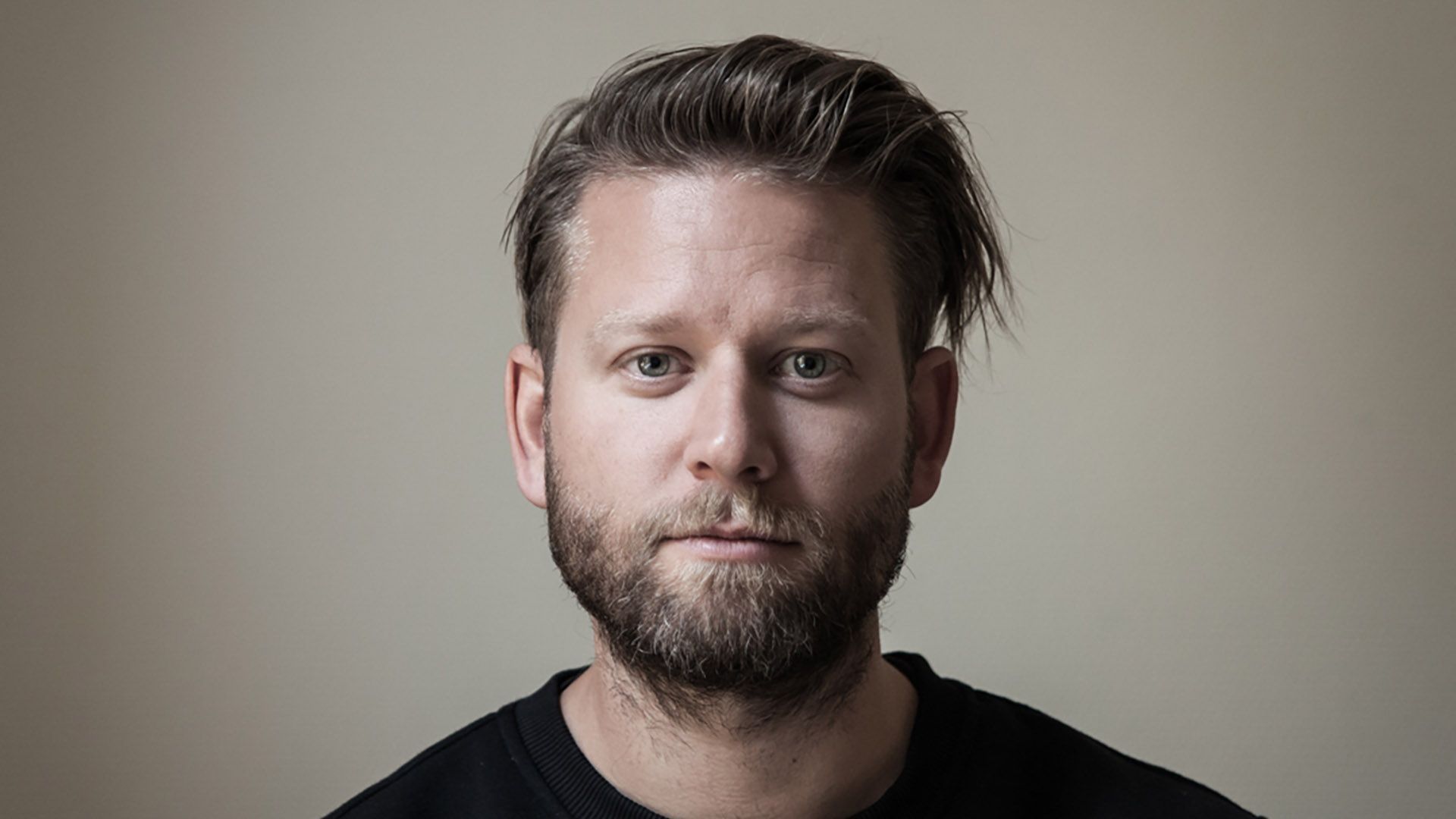
Norwegian writer and director Patrik Syversen returns to feature filmmaking with Dawning (Demring), a haunting yet tender psychological horror. The film is screening as part of PÖFF’s Midnight Shivers programme.
Before the film’s Estonian premiere at Tallinn Black Nights Film Festival, Syversen sat down with Elise Jagomägi to discuss the emotional roots of the story, his cinematic process, and the delicate balance between control and surrender in art and life.
Dawning feels like an intimate yet unsettling return to the quiet corners of family life, filled with secrets, grief, and protection through silence. What was the seed of this story for you?
The seed was twofold, one element was to explore how silence and repression go hand in hand with our need to define and talk about our pain; this need to put our complex inner lives into words in order to have some sort of command over it. Only life is full of elements beyond our control, and it’s when our need to control meets the uncontrollable that our lives tend to be upended - even when we’re intellectually «prepared» for anything. It’s an interesting blind spot we all have, one that can lead to suffering.
The other seed was the want to explore, cinematically, how contractions can coexist, by merging two extremes; the understated chamber piece, and the expressive horror film. The idea was to make a film where the form and structure itself is part of the exploration; where the friction that comes from the shifts in tone not only affects the characters and story, but the viewers themselves, since the tonal shift is a sort of breach of contract compared to what’s come before.
The remote family vacation home feels both like a refuge and a prison. What drew you to that setting, and did you have a specific place in mind while writing the script?
I had a specific feeling in mind, not the actual place. But the safety of familial habits and company, combined with the feeling of being trapped - even when surrounded by open, beautiful landscapes - was essential.
If you had to spend a weekend in a remote cabin like the one in Dawning, with no Wi-Fi, strange noises outside, and maybe a mysterious visitor, what three things would you absolutely bring with you?
If essentials like food and tools are already in place, I’d probably bring a book, a sweater and an extra pair of warm socks.
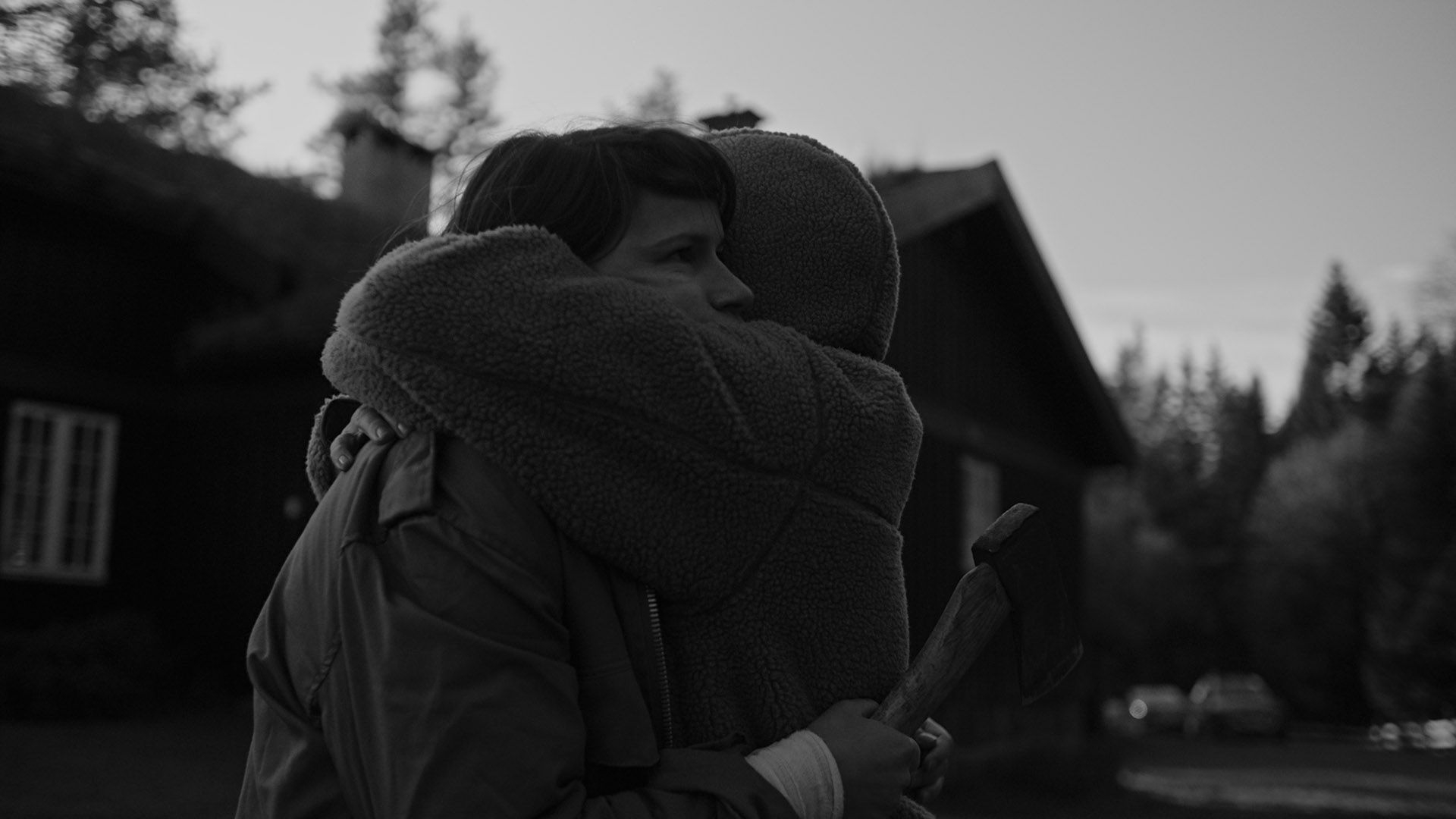
The choice to hide the mother’s death from the youngest sister introduces a moral fracture in the story. Do you see deception as a form of love, or as a symptom of fear?
I think it can be both. I think the characters in one way believe it’s an act of love, but it obviously stems from a need to control the narrative and postpone potential pain. It’s a dangerous form of love, because it denies the other part to have a say in their own process, and I think that’s a dilemma we’re faced with in many aspects of life - especially in close relationships. Those small lies that, if we look closely, are always about protecting ourselves from pain, even when we tell ourselves the opposite.
Of all the scenes in the film, which one challenged you the most, whether because of emotional weight, logistics with location, and how did you navigate that challenge?
There isn’t one that sticks out, but overall the tonal balance was the major challenge. Not because it was hard, but because we have lot of long dialogue heavy scenes that had to seem effortless, often in single takes with specific blocking and lots of moving parts. That calibration was a team effort between cinematographer Andreas Johannessen, the cast and I, so most of the work was finding that rhythm without overthinking things. Once we found the groove, we shot it, and tried to keep the number of takes to a minimum, to maintain a level of freshness.
You edited the film together with Erlend Mjømen Knudsen. What was it like to revisit your own material in the editing room, and did the process change your understanding of the story?
The fragmented aspect of the story was always on the page, so it was more a matter of finding an overall flow and let the footage lead the way. I did the assembly and structured the film, as some of the more associative elements are easier to explore with a first hand knowledge of the material and the intent, and then Erlend stepped in and helped me refine the edit. He’s a very musical and intuitive editor. I have a pretty clear idea as to where I want to end up, but there has to be a certain plasticity to the process, and that’s where it’s good to collaborate with someone who understands the tone of the film, who also challenges the material and opens up for discussions. I think we lost three scenes all together, and minor trims here and there, but the finished film doesn’t deviate from the script in any notable way.
What kind of stories frighten you most, the ones about the world outside us, or the ones about the world within?
I think the ones that merge the two are the most interesting and frightening. I have to add that I think that separation between within and without is a major reason for our fears. We feel that we’re unique in our suffering, and that the world is a scary thing that happens to us, but I believe the human experience is a lot more symbiotic than that. Our interiors shape our exteriors and vice versa, so this idea of separation between the two can be a hindrance. I mean, we’re all made up of the same stuff, this cosmic dance that gives and takes in equal measure.
What is your personal comfort movie, the one you watch when you need to escape from the world you create on screen?
I checked my log (I write down every film I watch) and the film I’ve seen most times recently is Carl Theodor Dreyer’s Day of Wrath! There’s something about the tone, the pacing, and just the form of it all that feels comforting to me, even if it’s a grueling film. I put on Stranger Than Paradise by Jim Jarmusch a lot, even if I should see something I haven’t seen. I just like sitting in those rooms with those people, who seem like they’re not in a hurry no matter what is thrown at them.
Speaking of parallel universes. If you could live for one day inside any film universe, your own or someone else’s, which would it be, and why?
Fanny and Alexander by Ingmar Bergman. Just that combination of tradition and warmth, and also everything that life contains. I want to be at that Christmas dinner, at least.
Do you ever dream about your characters after finishing a film, or do they politely leave your mind once the credits roll?
They’re gone. Like an idea drifting by, with a will of its own. I love them dearly, but also let them go once the film is finished.
Finally, if Dawning represents a movement toward light, what do you hope audiences carry with them when they leave the theater?
I hope they find the hope, love and beauty in things. That the fact that life continues, insists on continuing, is a beautiful thing. Sometimes it can be scary, because we want time to stop to acknowledge our suffering, but that’s not the case and never will be. And if we accept that, life - and death - might be a little bit easier.